
Get Support
+91-9152530412

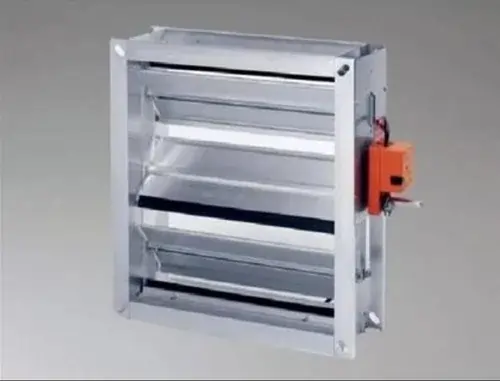
Motorized Duct Damper
| Air Damper Type | Duct Dampers |
| Material | Stainless Steel |
| Voltage | 220 V |
| Frequency | 60Hz |
| Usage/Application | Volume Control |
| Height | 50cm |
A Motorized Duct Damper is an automated device used to regulate and control the airflow within HVAC systems or ventilation ductwork. It consists of a damper blade that can be adjusted to open or close the duct, controlling the volume of air passing through. The adjustment is made automatically via an electric motor, which is controlled by a signal from a thermostat, control system, or manual switch.
Key Features:
1. Motorized Operation: Unlike manual dampers, a motorized duct damper uses an electric motor to adjust the position of the damper blade. This enables remote or automated control of airflow, improving system efficiency and ease of operation.
2. Airflow Control: By adjusting the damper blade, the motorized damper can precisely regulate the volume of air moving through the duct. It helps balance the airflow in different parts of an HVAC system, optimizing heating, cooling, and ventilation.
3. Types of Dampers:
- On/Off Dampers: These dampers open or close fully to regulate air.
- Modulating Dampers: These allow for continuous adjustments, providing more fine-grained control over airflow.
4. Materials: Motorized dampers are often made from materials like galvanized steel, aluminum, or stainless steel, providing durability and resistance to wear and corrosion. The blades are typically insulated to prevent air leaks and improve energy efficiency.
5. Control Systems: These dampers can be connected to a building's HVAC control system, allowing for integration with thermostats, zone control systems, or building management systems (BMS). This enables the damper to open or close in response to temperature changes, airflow demands, or system requirements.
6. Applications: Motorized duct dampers are used in:
- HVAC systems: For balancing airflow across different zones of a building.
- Fire and smoke control: In fire-rated ducts, where dampers close automatically to prevent smoke or heat from spreading.
- Air handling units: To control supply or return air based on changing conditions.
- Energy efficiency systems: To optimize ventilation and reduce energy consumption by adjusting airflow based on real-time needs.
Benefits:
- Automation: The motorized damper removes the need for manual adjustment, making it more convenient and efficient to control airflow.
- Energy Savings: By regulating airflow based on real-time demand, these dampers help improve system efficiency and reduce energy consumption.
- Improved Comfort: In HVAC systems, motorized dampers ensure that temperature and airflow are evenly distributed across different zones or areas, enhancing comfort.
- Fire Safety: In fire-rated systems, motorized dampers help contain smoke and fire, automatically closing when triggered by smoke detectors or fire alarms.